
What Can Black Soldier Fly Larvae Eat in the EU? Understanding Feed Regulations for Insect Production
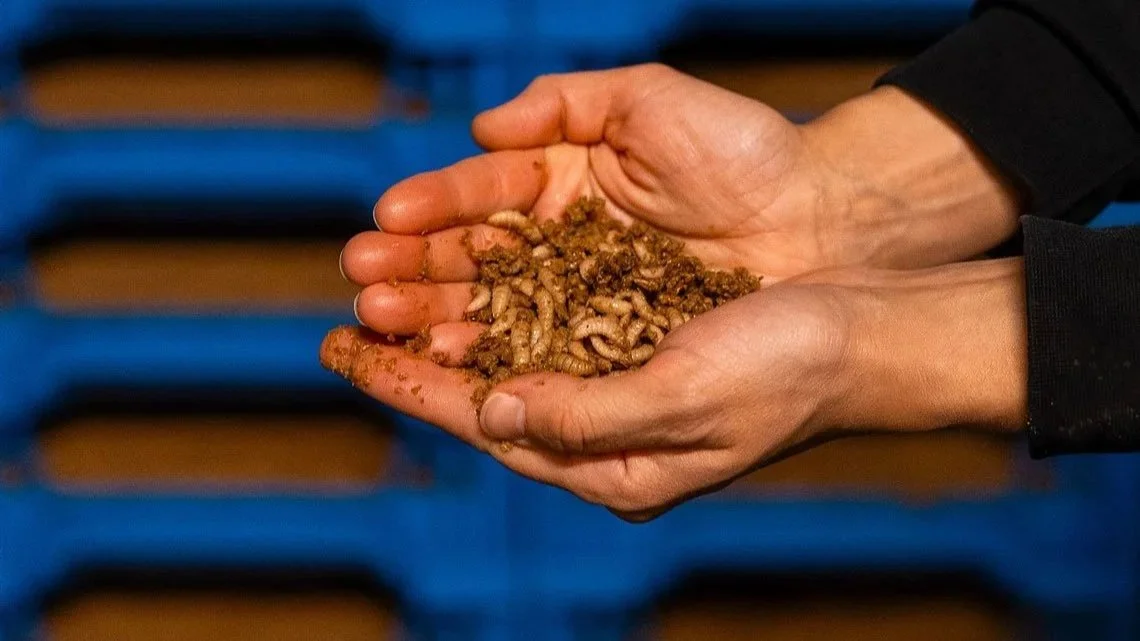
Photo: © Matthias Nemmert
Black Soldier Fly (BSF) larvae are at the center of Europe’s growing insect farming sector. Their ability to convert low-value side streams into protein, fat, and fertilizer has made them one of the most promising tools for circular, bio-based production.
However, unlike in many regions worldwide, the EU applies strict feed regulations that define exactly what substrates can be used in insect farming. Understanding these rules is essential for any producer operating legally, safely, and at industrial scale. For companies using modular and scalable BSF technology, these regulations help ensure predictable, high-quality results.
Why EU BSF Feed Regulations Are So Specific
In Europe, farmed insects are legally classified as farmed animals. This means:
Their feed must meet EU hygiene rules
All substrates must be traceable
Production must follow safety standards similar to traditional livestock systems
These regulations aim to prevent contamination, guarantee feed safety, and create a reliable framework for industrial insect production. Scientific guidance, such as the EFSA risk assessment on insects, supports these measures.
Allowed Substrates for BSF Larvae in the EU
EU legislation allows only certain feed materials. These include:
Plant-based materials
Fruit and vegetable residues
Cereal and oilseed by-products
Brewery and bakery side streams
Former foodstuffs of plant origin (without meat or fish)
Limited animal-derived materials
Dairy products
Eggs and egg products
Specific rendered fats from non-ruminants
Prohibited Substrates in EU BSF Farming
To maintain feed safety, the EU prohibits feeding BSF larvae with:
Catering or household food waste
Former food containing meat or fish
Slaughterhouse by-products
Animal manure or feces
Any untraceable or mixed waste streams
Requirements for Producers
Commercial BSF farms in Europe must operate under:
HACCP-based hygiene protocols
Feed Business Operator regulations
Regular product and process testing
Traceability of all substrates
These measures ensure safe, consistent, and compliant insect production at industrial scale, supporting operators who use modular, scalable BSF technology like Livin Farms.
Will Substrate Rules Change in the Future?
The sector continues to discuss broader substrate options, but as of 2025, no regulatory expansion has been implemented. Producers must rely on approved, traceable plant-based streams and limited animal-derived materials to remain compliant.
Conclusion
Understanding EU substrate rules is essential for anyone working with Black Soldier Fly technology in Europe. While restrictions are stricter than in other regions, they provide a clear framework for safe, scalable insect production. Using modular and scalable BSF technology ensures predictable larvae performance and allows operators to comply with regulations while producing high-quality protein for feed applications.
For global context on insects as feed, see the FAO overview.